Końcewo · since 1999
The Kołakowski family’s homestead in Masuria. From horses — to goats. From milk — to beechwood shelves ripening in the cellar. From season to season, from the buck to the little kids.
01 · Geography
Końcewo is a small village in the Ruciane-Nida municipality, in the south of the Masurian Lake District. Pine forest on every side, lakes all around — Jegocin nearest, just beyond the trees, Śniardwy three kilometres off, and further out Roś, Tałty, Bełdany. The road to the village runs through pine forest.
In summer the whole area smells of resin and of tomatoes from the kitchen gardens. In winter there is complete silence, and now and then a deer passes through. The landscape here has not changed in decades — the same forest, the same lakes, the same roads.
Masuria — the lake-and-forest east of Poland, far from the main routes. Two hundred and twenty kilometres from Warsaw, seventy-five from Olsztyn, twenty-two from Mikołajki. Końcewo sits quietly within this geography, off to one side.
A place where you can hear the cheese ripen.
02 · History of the homestead
The homestead is over a hundred years old. Before 1999 other buildings stood here — a timber house and a timber barn, belonging to another family. That history we do not fully know.
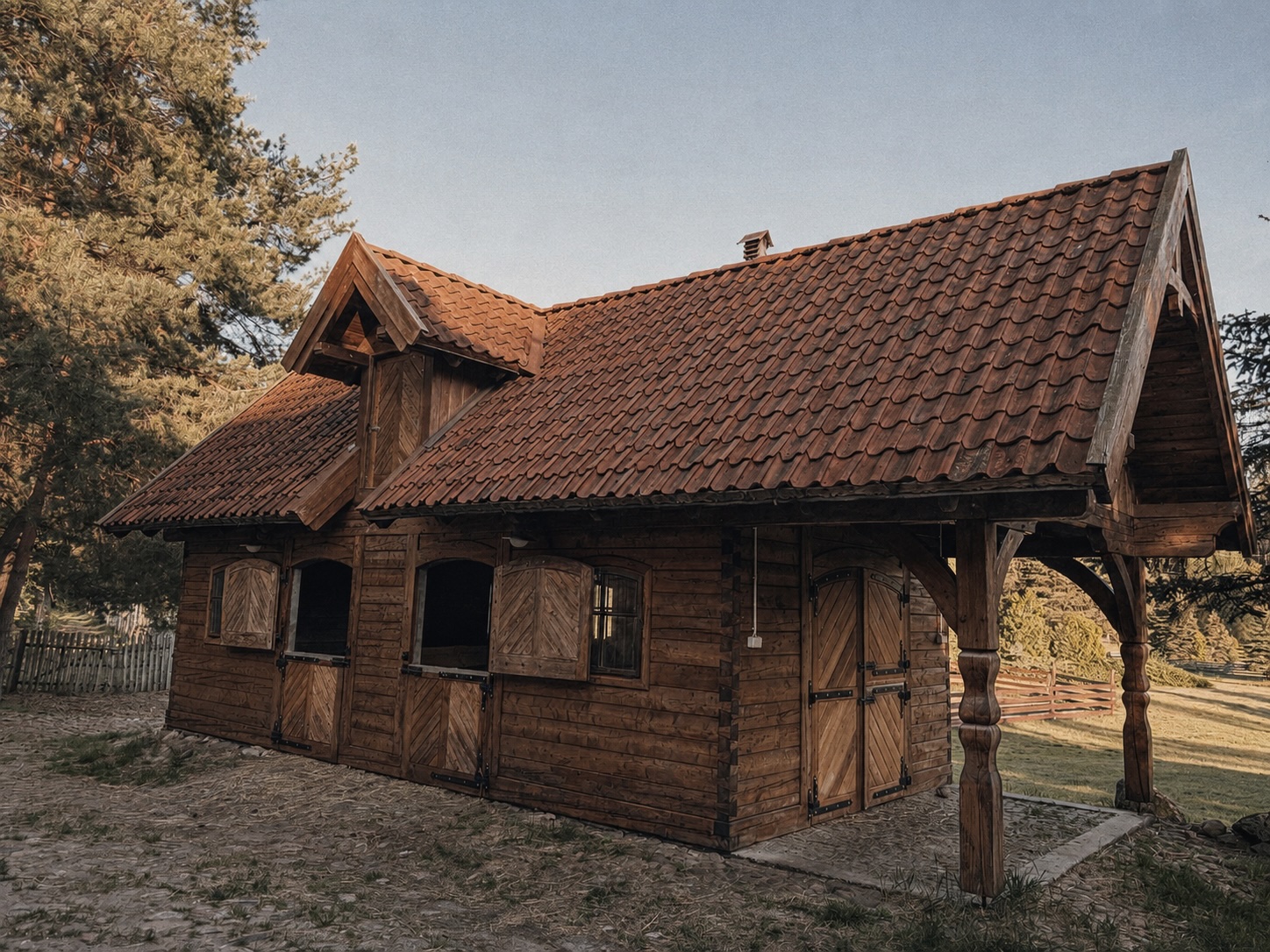
In 1999 the farm was bought by the Kołakowski family. They set out to rebuild it entirely — keeping the layout and character of a Masurian homestead, but replacing almost everything. The main house went up where the old barn had stood. The present stable — where the old house had been. Brick in the footings, timber on the upper floors, red roof tiles. Construction typical of turn-of-the-century Masurian farms, but raised anew.
For the first years they kept only horses here. The stable was ready, the paddocks fenced, the meadows sown with grass. Horses live on the farm to this day — two old ones, retired now, on their own pasture on the far side of the homestead. They no longer work, but they are part of the everyday.
The idea of goats came a dozen or more years later.
03 · The cycle
Four seasons, four rhythms. The farm runs on natural time — not by a calendar of appointments, nor by opening hours.
Spring · March – May
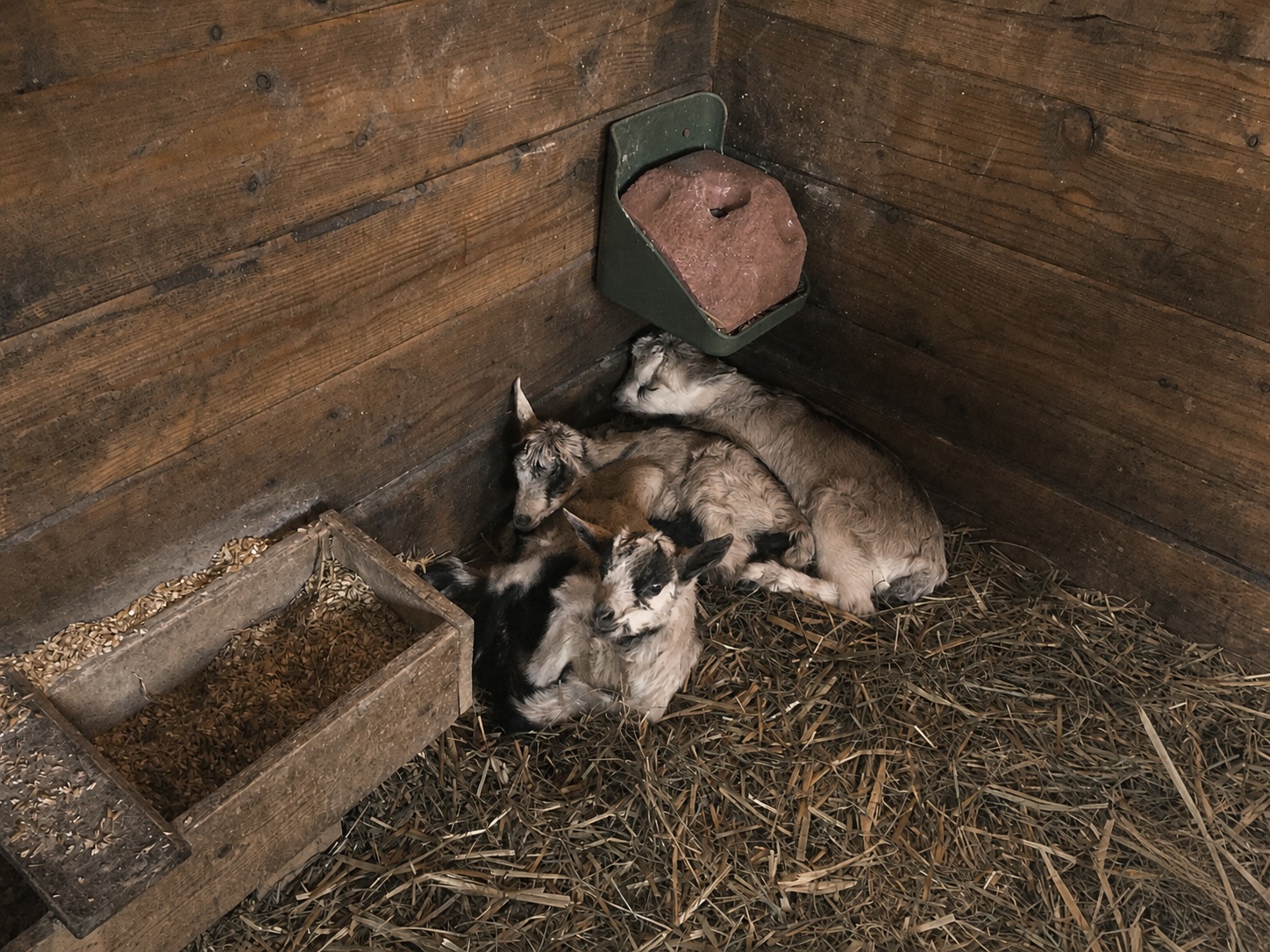
Kids in their first days after birth
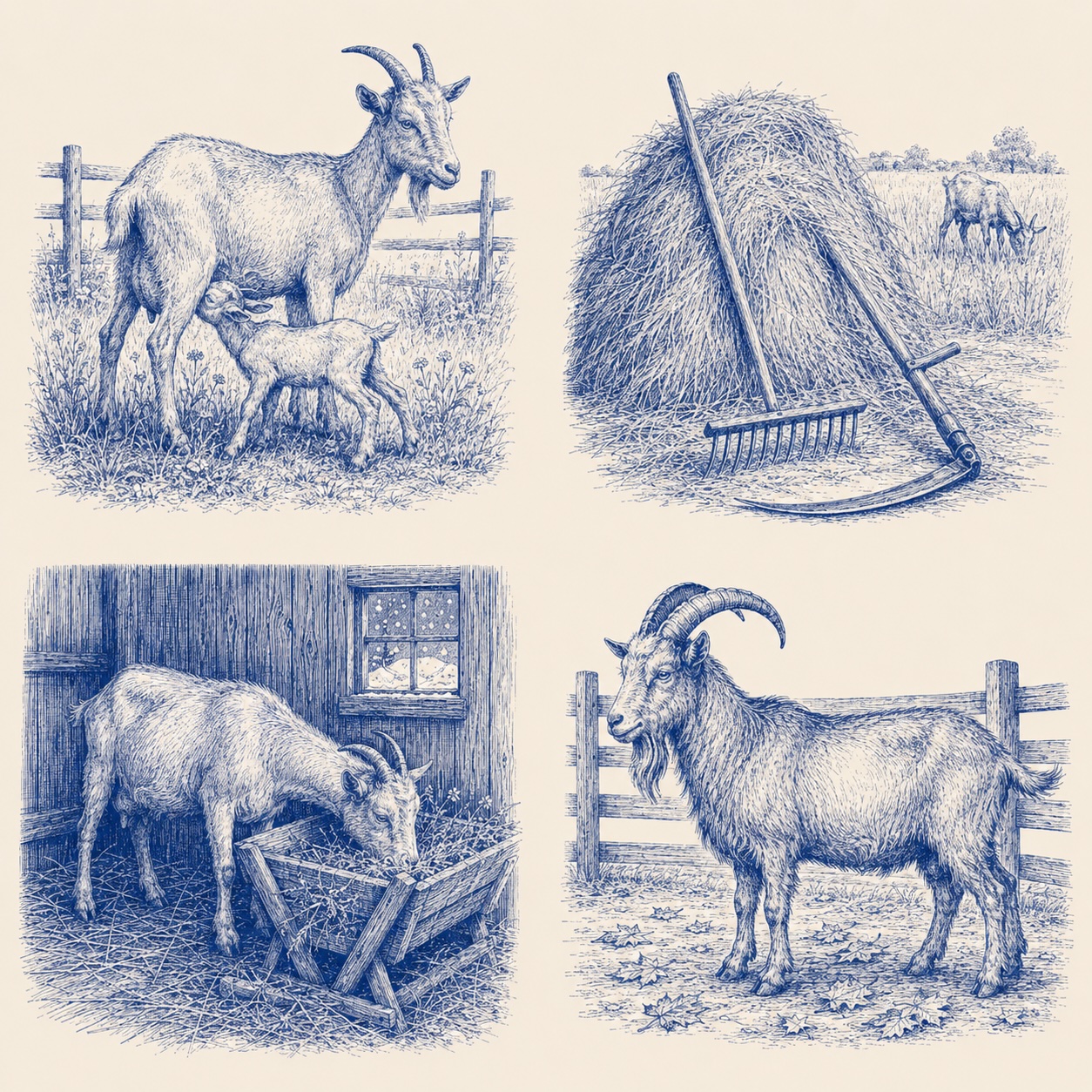
A new sound rises from the pens by the stable — the short, high bleat of the newborn. Each year twenty to thirty kids are born, over a few weeks. Their first days are spent beside their mothers — learning to walk, to drink milk, to nibble sprigs of herbs on the pasture. Spring milk is the sweetest, for the goats are rested after winter and the meadow is at its richest in young herbs.
Summer · June – August
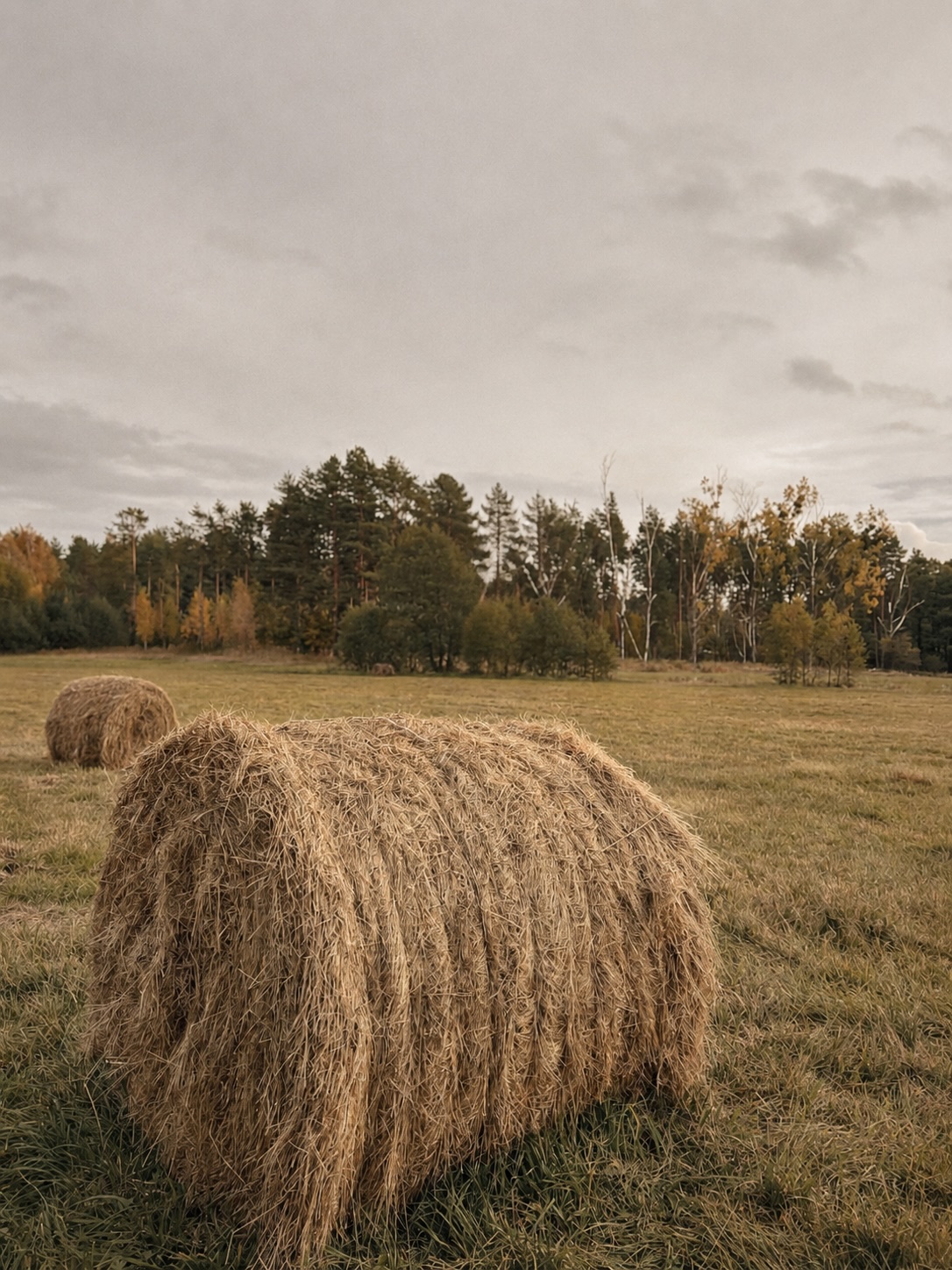
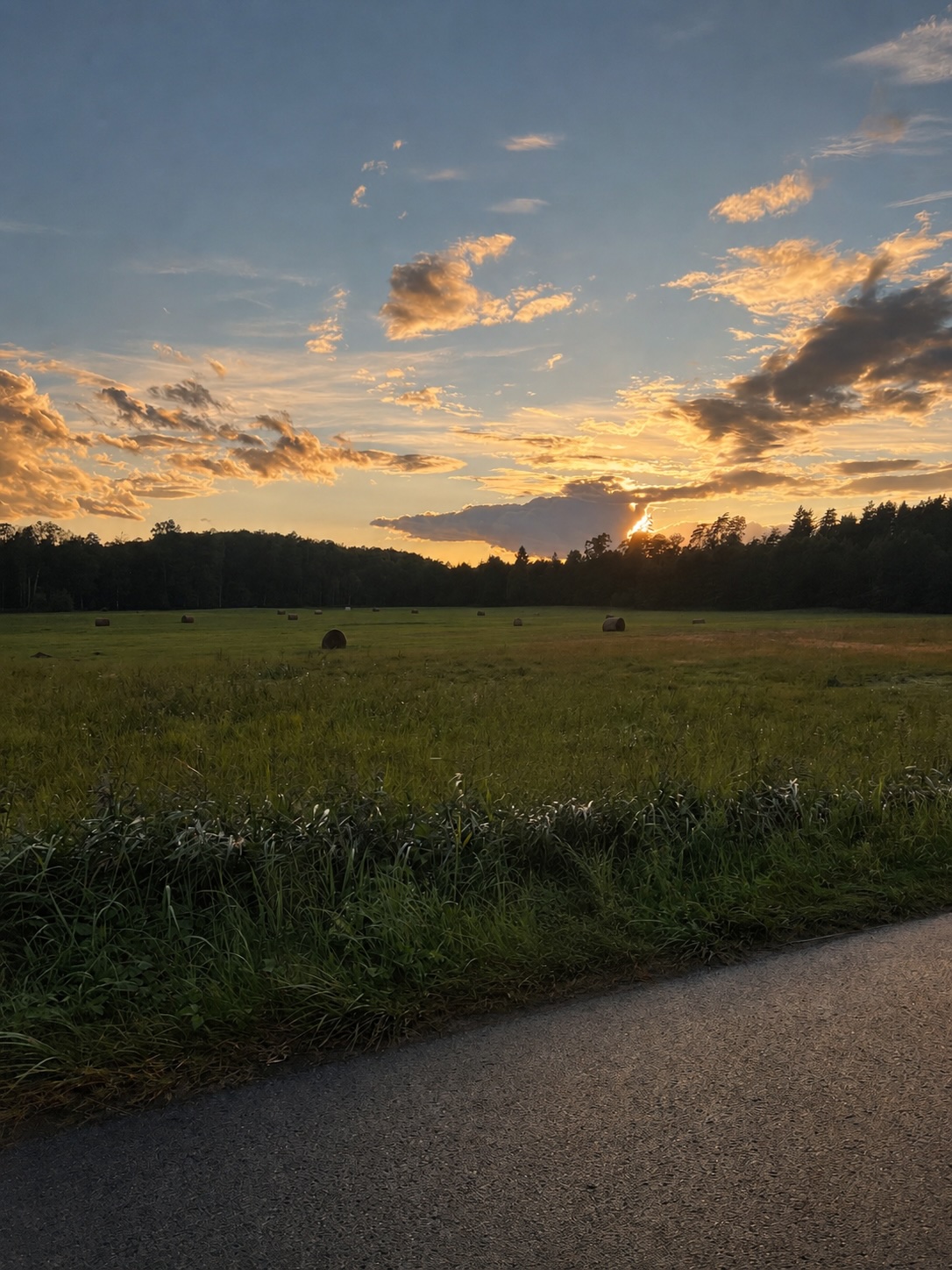
A hayfield · August 2025
Haymaking. The fields around the homestead — fifteen hectares of land scattered between forest and village — are cut twice a season. The first mowing in June, the second in August. We dry the grass in the sun, bring it into the barn, stack it in ricks. This is the store for winter: on good hay the herd will be fed from November to April.
Alongside the haymaking, the kitchen garden by the house grows on — tomatoes, cucumbers, herbs, pumpkin, cabbage. Some of the vegetables reach the family table, some go to the goats, who judge every scrap from the vantage of the herd’s hierarchy.
In summer the goats graze the pastures from dawn to dusk.
Autumn · September – November
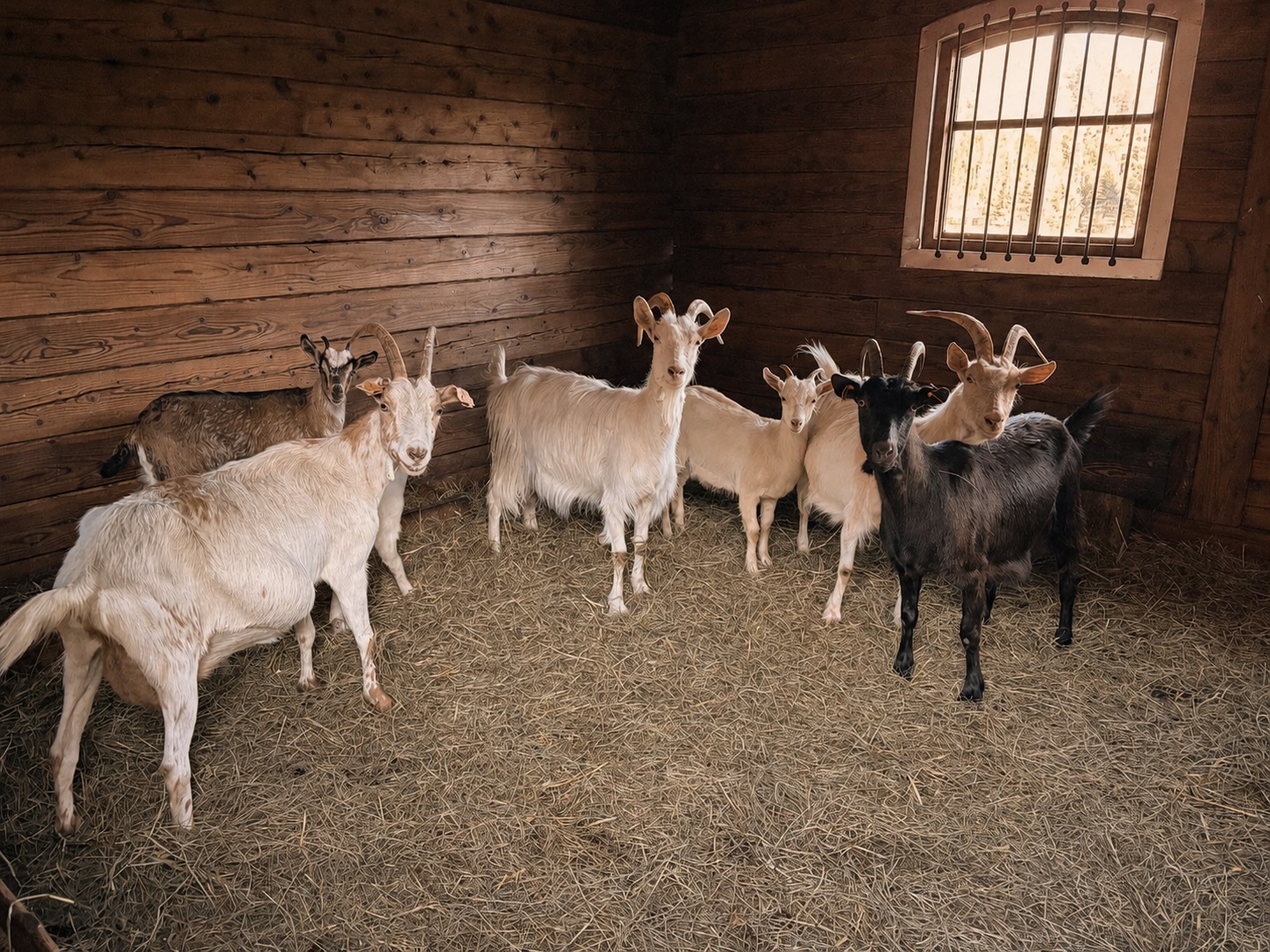
Goats in the shed, late afternoon
The buck’s time. On the far side of the farm, in a pen of his own, the old buck waits. The mature goats come to him one by one, for a few days — such is nature. Five months later, in spring, the next kids are born. A cycle unchanged for millennia.
At the same time the first cheeses from the summer milk begin to ripen — the deepest in flavour, for they come from the most varied feed.
Winter · December – February
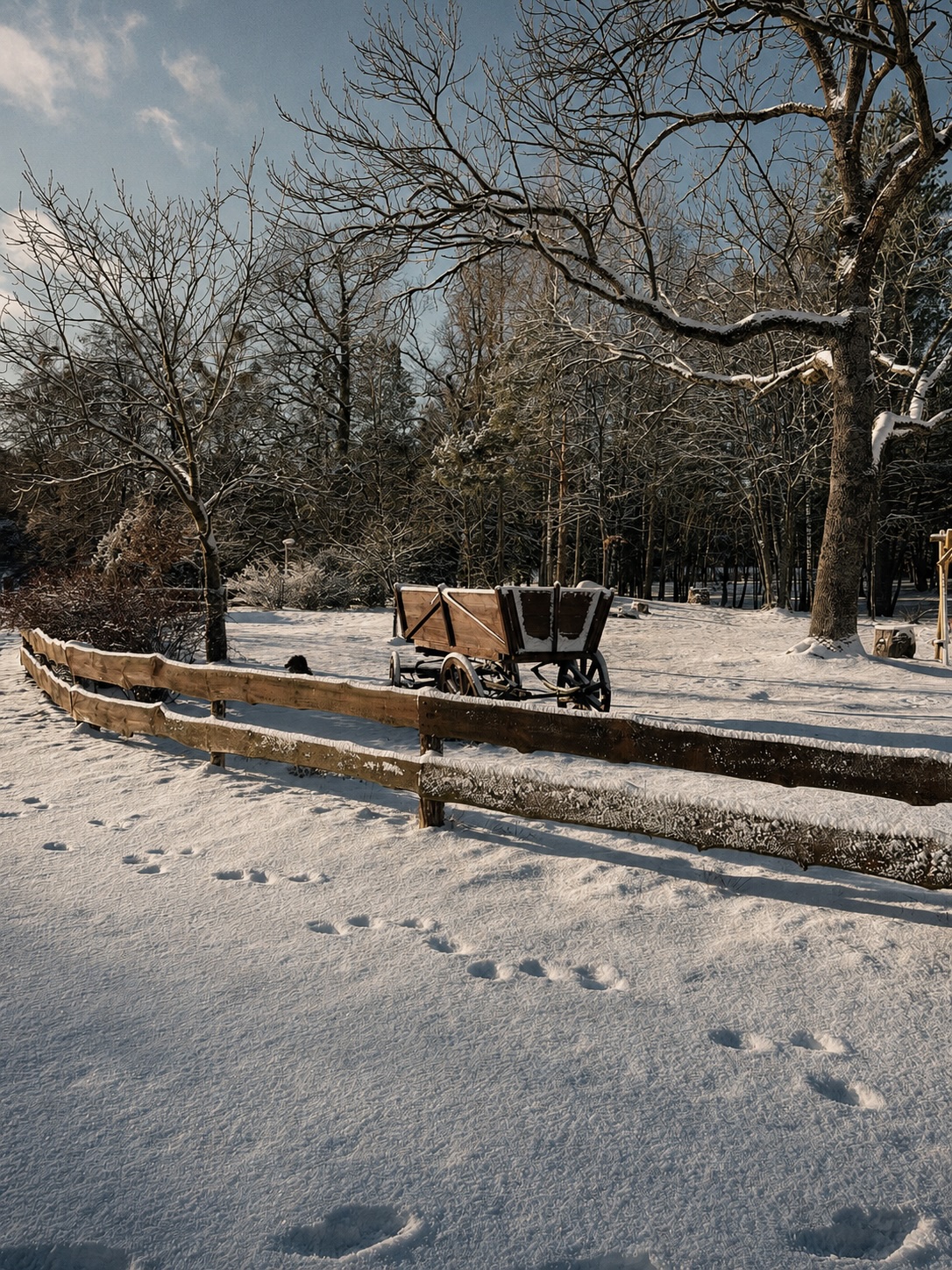
The carriage by the stable · February 2026
The ripening chamber holds the most work. The summer cheeses come to full maturity, those from autumn are only beginning to grow their rinds. Every wheel is turned each day — an hour’s work in the morning, an hour in the evening. The goats in the shed, on hay from the June mowing. Snow outside, steady humidity and cool within — conditions ideal for ripening. This is the season when the farm sleeps on the outside and, within, works hardest of all.
04 · The farm today
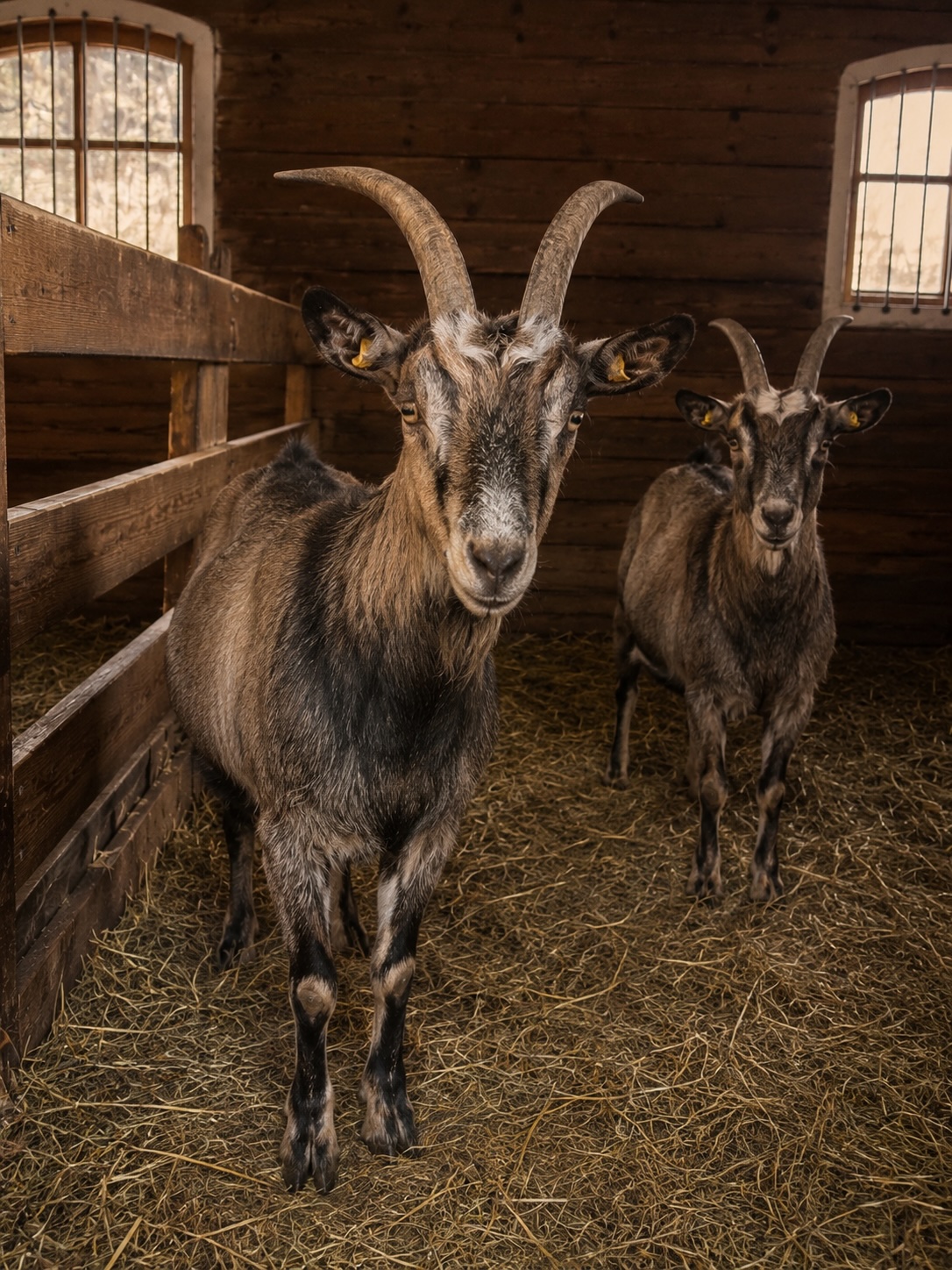
About eighty goats live on the farm now. Two pens with runs, a small shed, a large shed. On the far side of the homestead — a separate pen for the buck. Each goat has its place, and the herd regulates itself.
Milking happens twice a day — around six in the morning, after seven in the evening. All by hand, each goat in her own way. The milk from the morning milking reaches the dairy at body temperature — we culture it at once, add rennet, shape it. Fresh cheese is made the same day. Aged cheese begins its sixty days — or more.
The horses stayed. Two horses in retirement, on their own pasture on the far side of the homestead. They no longer work, but they are part of the farm, part of its ordinary day.
Goats in the herd
approx. 80
Homestead
3 ha
With the fields
15 ha
Other residents
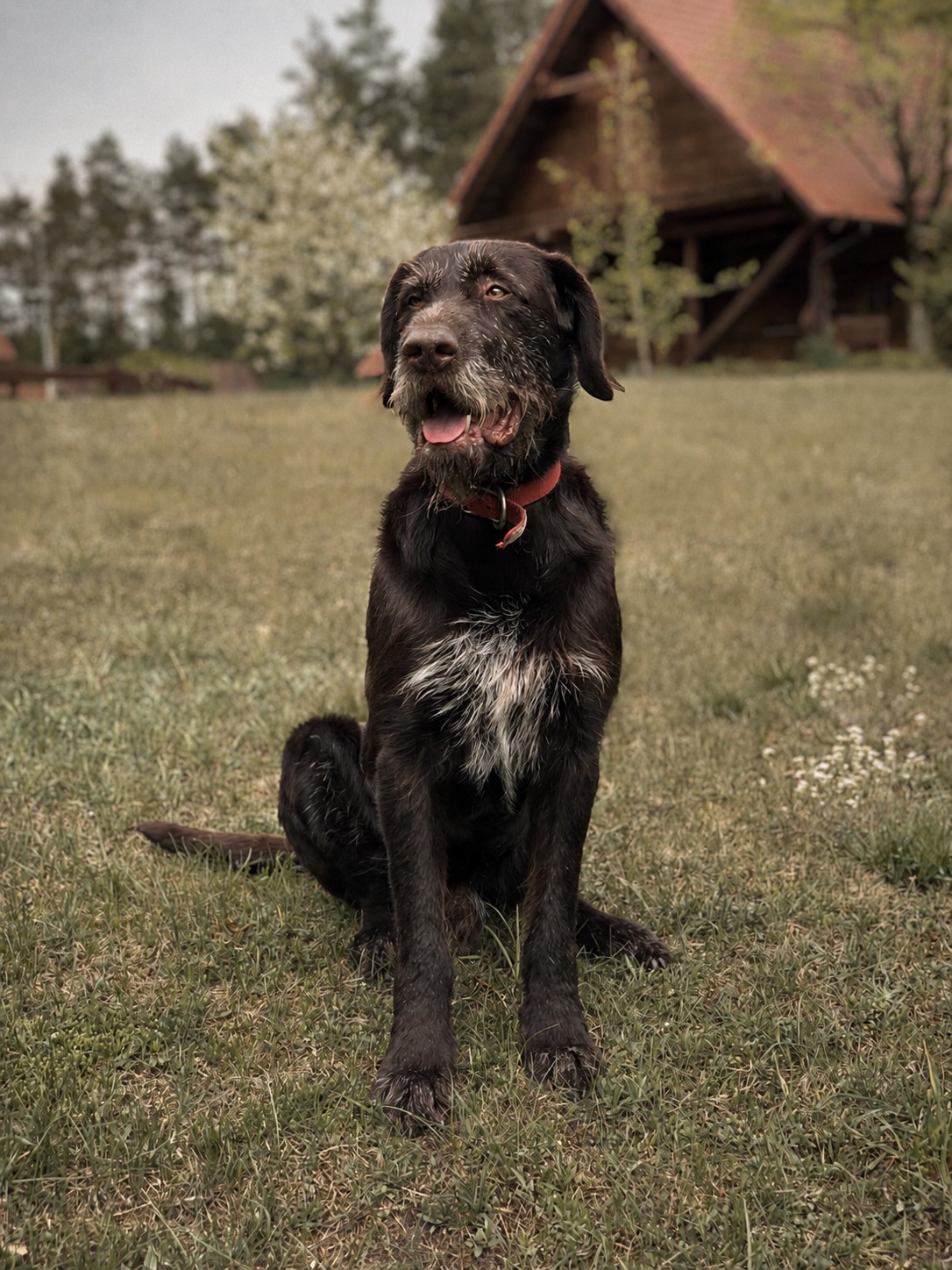
Fred · wire-haired pointer
Brown, with a white blaze on his chest. An everyday companion. He runs with the herd when the goats go to pasture, and knows which goat usually leaves first and which last.
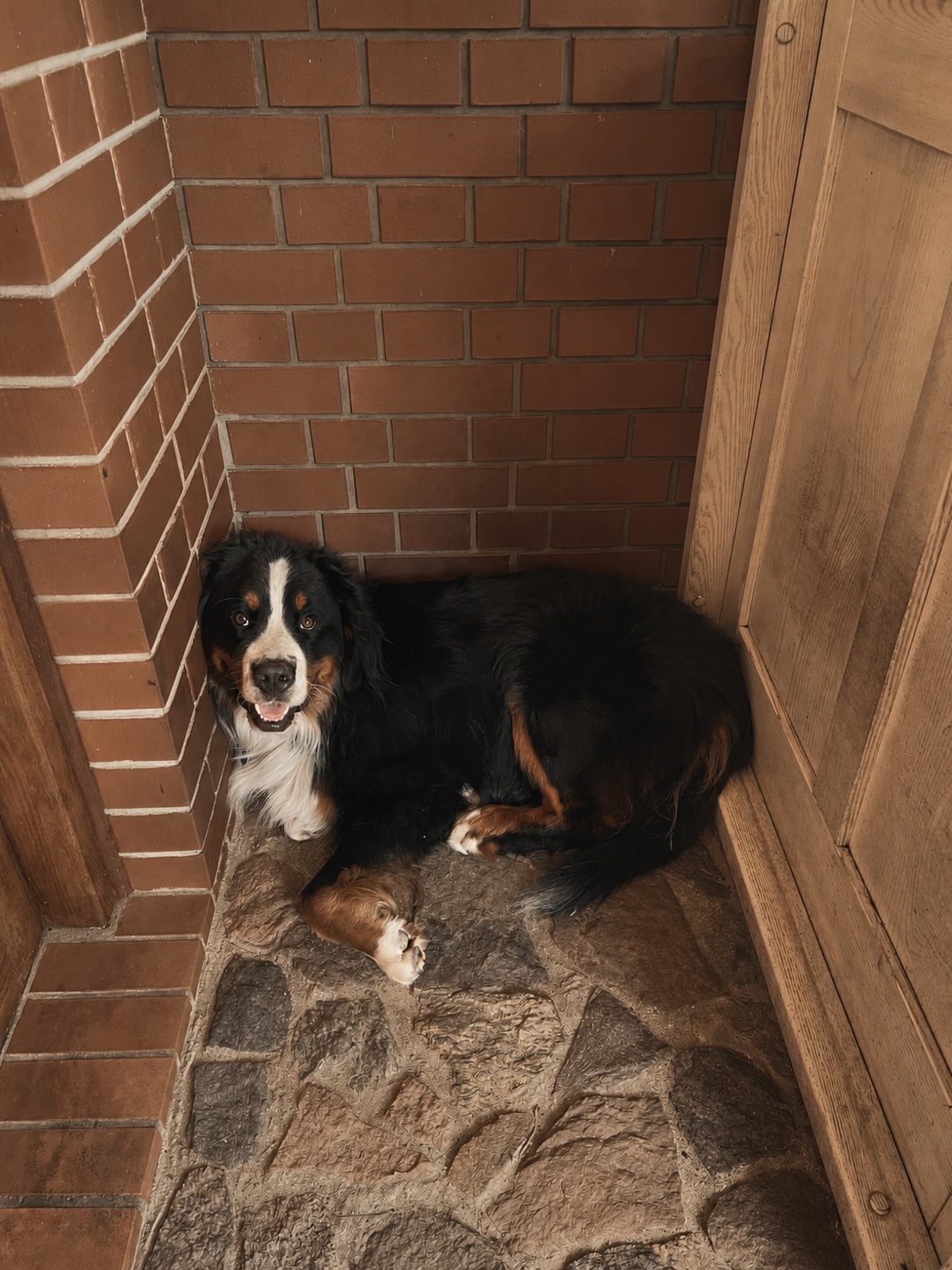
Harry · Bernese mountain dog
Larger, calmer, born to be among animals. He watches over the homestead on the forest side. Most often you will find him in the shade by the wall of the house or by the gate.
Every goat knows them from afar. They know every goat.
05 · Before you come
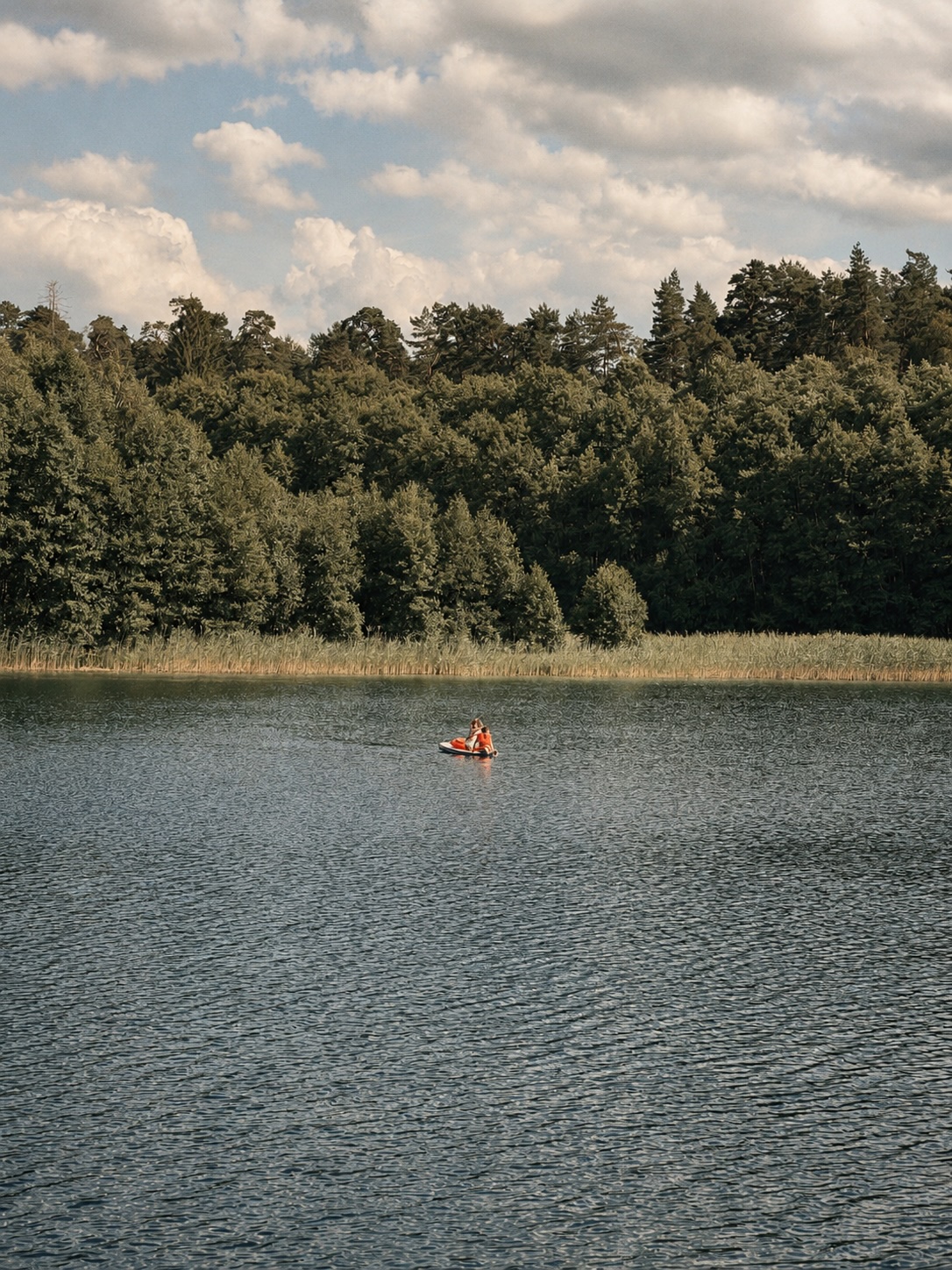
Bożena and her husband run the farm together, day in and day out. But it is not a whole day spent sitting in the dairy — Masuria is too beautiful to pass one’s life only between the barn and the ripening chamber. In summer they sail Śniardwy by trimaran or motorboat, in autumn they take long bicycle rides around the area. They walk in the forest, they are out on the lake. Masuria is not only the place of their work — it is the place of their life.
So it is best to call before you set out. The number is in the footer, on the Visit page, everywhere — +48 606 223 050. One call the day before settles everything: there will be cheese, there will be milk (if you order a day ahead), and the Kołakowski family will be there to show you around the homestead — the goats, the pens, the runs, the ripening chamber.
The goats, of course, are always here.
· ✻ ·