Końcewo · Craft

Milk in the morning. Cheese by evening.
Or in sixty days.

Two methods, two rhythms of work. Fresh cheese is made in a single day. The aged one works on itself for two months.

Method 01

Fresh goat cheese

Five steps, one day from the milking to the finished cheese.


01 · Milking and preparing the milk

Morning milk, straight to the dairy

We milk the goats twice a day, by hand. Milk from the morning milking reaches the dairy still at body temperature — that is the key to a fresh cheese. We filter it and cool it to about 30°C.

02 · Culturing and rennet

Bacterial culture and rennet

We add a living bacterial culture — it is what begins to acidify the milk and develop its flavour. After a few dozen minutes we add rennet. The milk starts to set slowly, over about an hour.


03 · Cutting and moulding

The curd cut into cubes

Once the curd is ready, we cut it into cubes the size of a walnut. We stir, and wait for the whey to separate. We transfer it to wooden moulds, where the whey drains away.


04 · Salting

Salt by hand, evenly

Once out of the moulds, we salt the cheese by hand over its whole surface. The salt works in slowly, evenly. No spices, no herbs — a clean taste.


05 · The day it is made

Ready to collect by the afternoon

The cheese is ready that same afternoon. We wrap it in paper stamped with the Końcewo mark. It is at its best in the first two or three days — which is why we sell it fresh, straight from the farm.


Method 02

Aged goat cheese

Six steps, about sixty days. The deepest cheeses — from the summer.

The first three steps — as with the fresh cheese

01 · Milking and preparation

Morning milk, filtered, cooled to 30°C

Exactly as with the fresh cheese.


02 · Culturing

Culture, rennet, an hour of waiting for the curd

The same gestures, the same rhythm.


03 · Moulding

The curd cut, transferred to moulds, the whey draining

From this point the two cheeses part ways.

Here the long wait begins

04 · Brine

The first hours: in brine

We submerge the freshly moulded wheels in brine — water with a high concentration of table salt. There they spend from a few to a dozen hours, depending on their size. The brine penetrates the cheese evenly, gives it character, and preserves it.


05 · Ageing in the chamber

Beech shelves, steady humidity, cool air

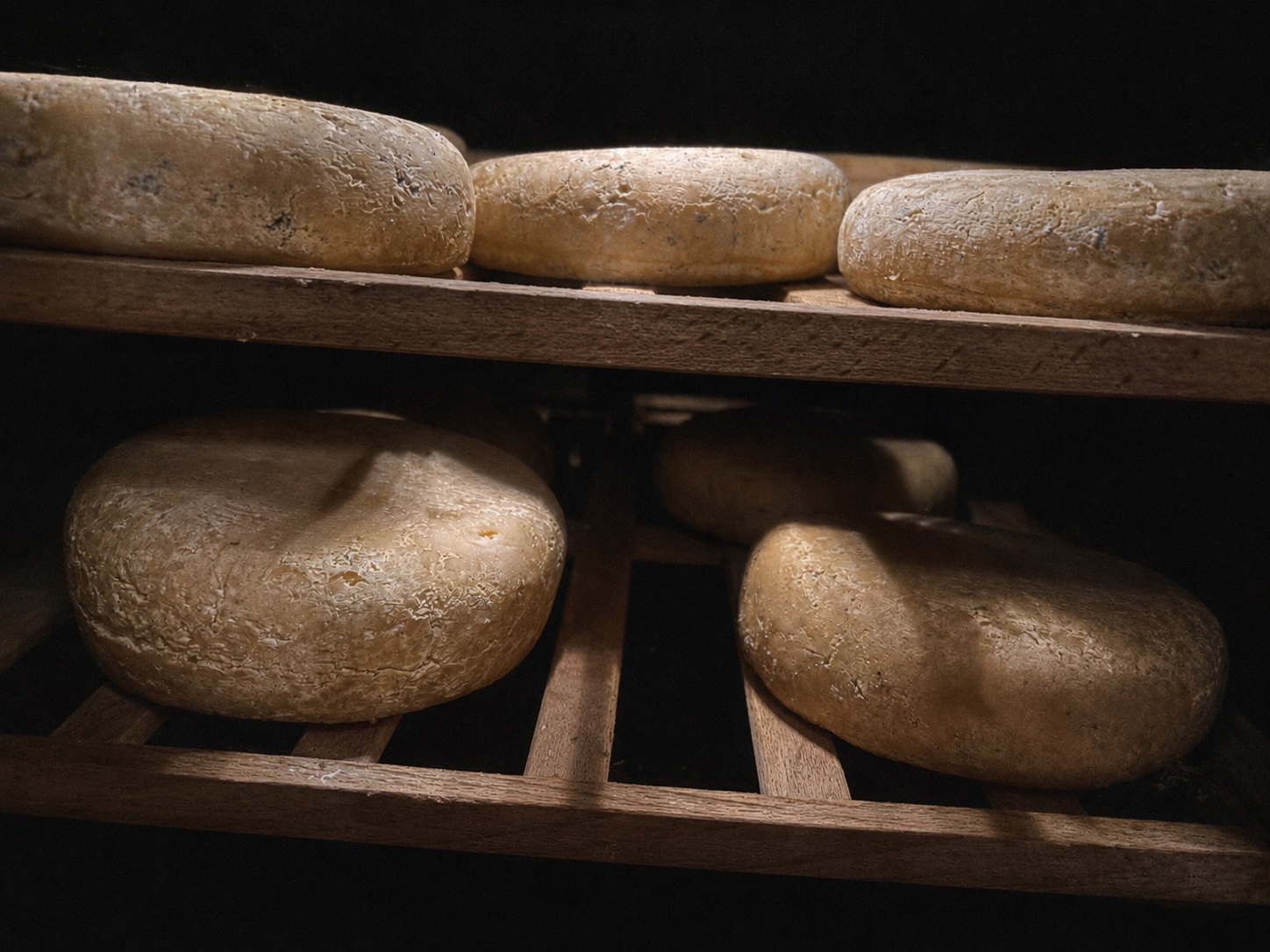
After the brine, the wheels move to the ageing chamber — a cellar with steady humidity and a temperature of 10–12°C. They rest on beech shelves. Each day we turn every wheel by hand. The rind develops slowly, the flavour deepens.


06 · Ready after 60 days

Some wheels sooner, some later

Sixty days is the average. Some wheels we sell sooner — while they are still soft and mild. Some age longer, into something sharper. Each has its moment. We wrap them in parchment paper with the stamp — cut in front of you, or the whole wheel.


The ageing chamber — wheels of goat cheese on beech shelves in the cool
The ageing chamber · Końcewo

Every drop from our own goats

The cheeses are made only from the milk of goats that graze on our farm. We do not buy milk. We do not blend. The scale of production matches the scale of the herd — a few wheels a day, never more.

Next

Milk in the morning, cheese by evening — and then the choice is yours.