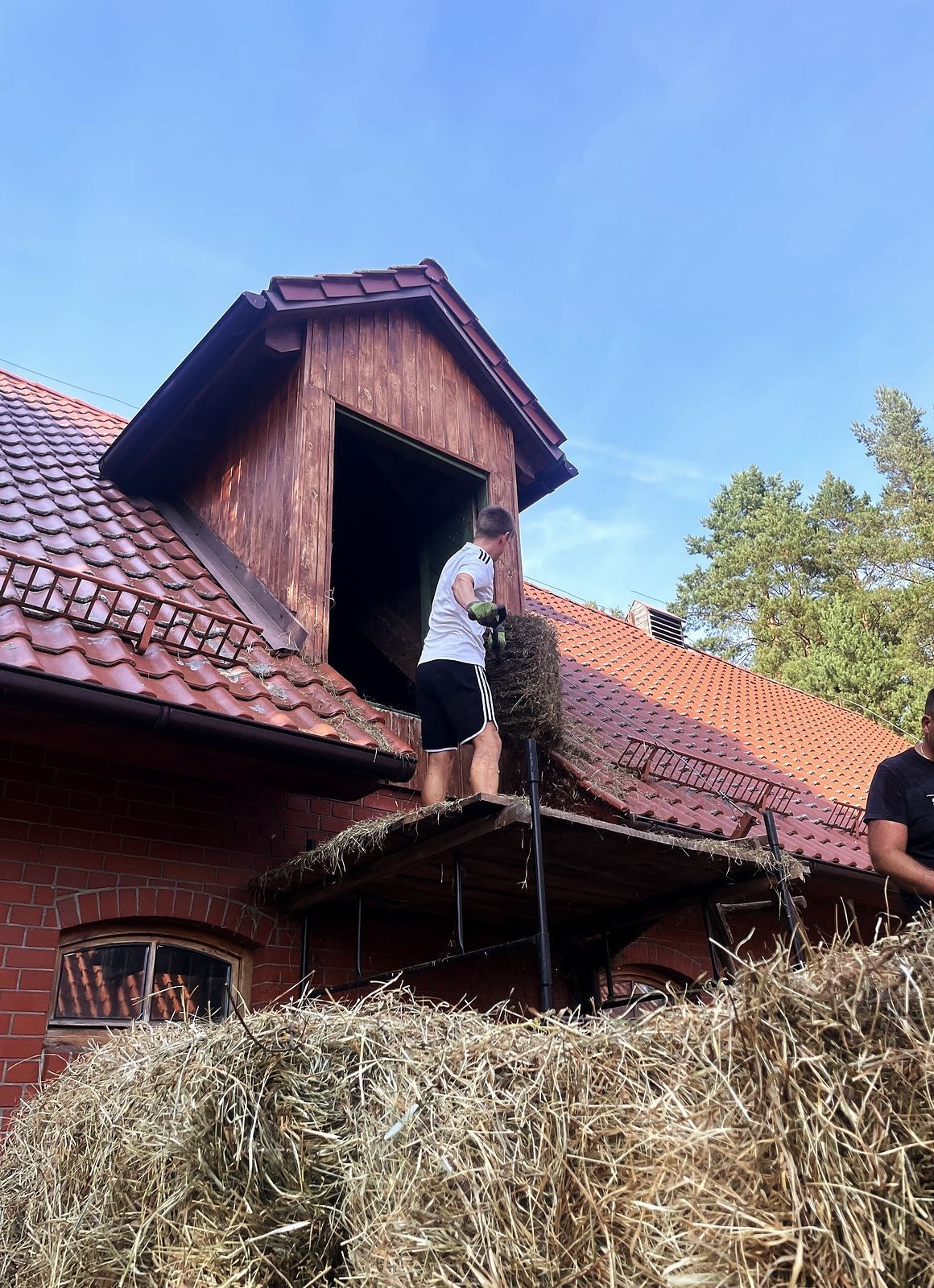
We mowed in the last week of June, four days straight. The rain was due on Sunday, and it came. The hay was already inside.
The first cut always starts the same way: one looks at the forecast, the other looks at the sky. This year both said the same thing — four dry days, then a break. We mowed on Monday, turned it on Tuesday, baled it on Thursday.
The bales go up the way they always have — through a window in the roof. There is no lift and no conveyor. There is a plank, two pairs of hands and someone below who passes them up. A bale weighs twenty kilos and you have to catch it in one motion, because by the second it is already too late.
“The rain was due on Sunday. It came. The hay had been inside since Saturday.”
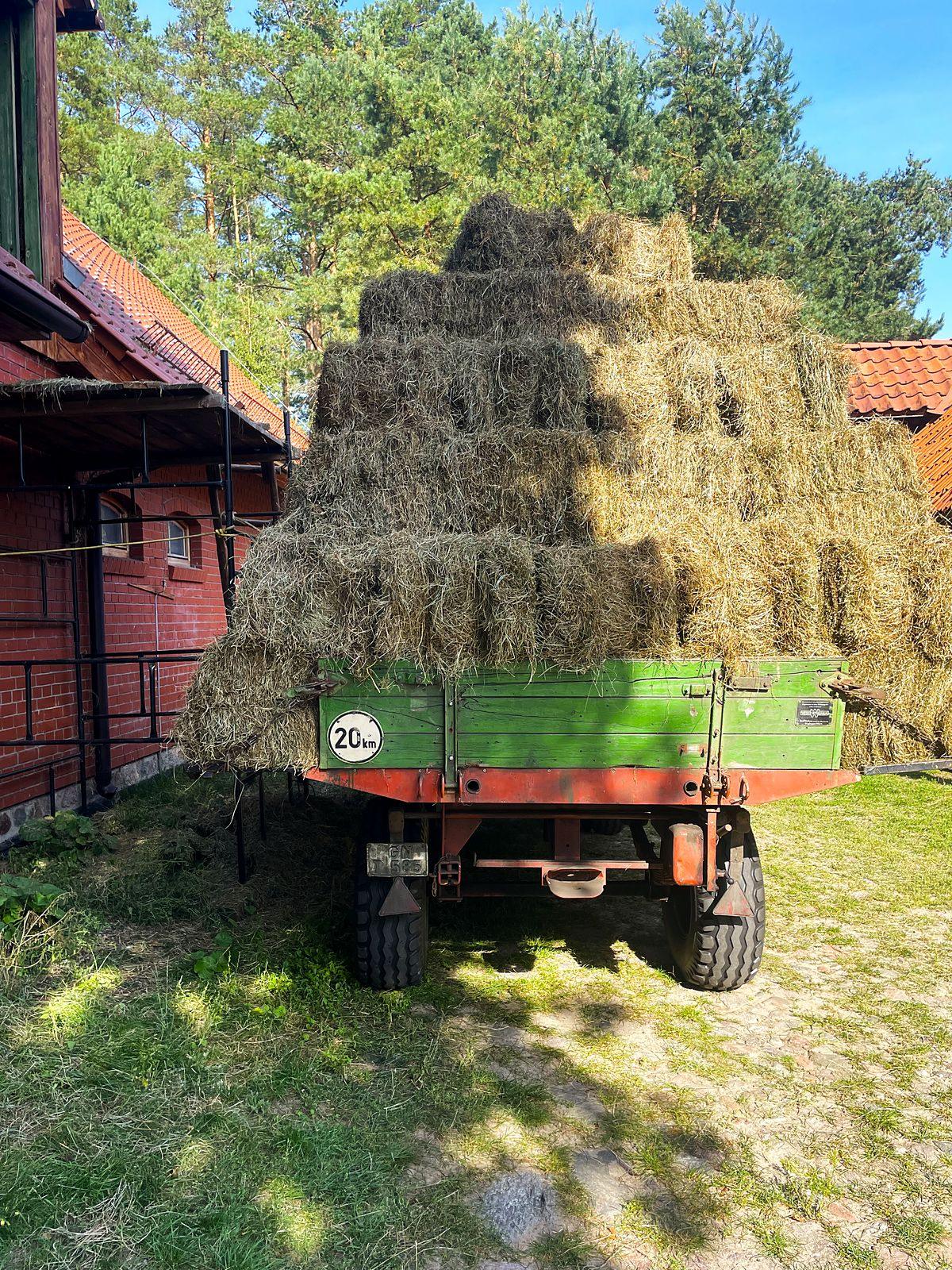
The trailer is older than the dairy and will probably outlive us. The plate on its side says twenty kilometres an hour, and that is not a suggestion. The neighbour comes with his tractor; in July we drive over to his field. Nobody counts the hours. That is how Masuria has worked for generations — an exchange of labour, not money.
The first cut came off fifteen hectares. The second will be in August, as usual — as long as the summer does not surprise us.
Grass from the first cut is different from the second: more herbs, less bulk. The goats notice it right away. We notice it later — first in the milk, then in the cheese. It all connects.